


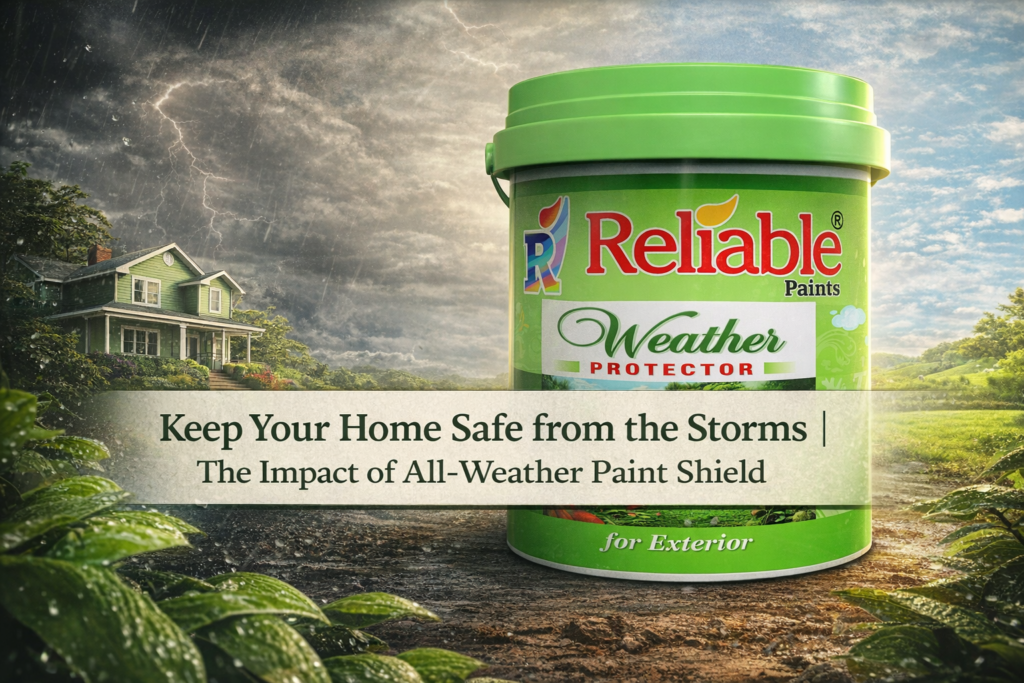
When the dark clouds gather and the wind begins to howl, your home stands as your family’s final line of defense. But while we often worry about windows and roofs, the very skin of your house your exterior walls is under constant attack. Rain seeps into microscopic cracks, humidity fuels mold, and UV rays weaken the structural integrity of your siding.
This is where all-weather paint shield technology changes the game. It isn’t just about a “fresh coat of paint”; it’s about applying a high-tech membrane that acts as a suit of armor for your property.
In this guide, we will walk you through the step-by-step process of storm-proofing your home using the industry-leading Reliable Paints Weather Protector, offering options for both budget-conscious DIYers and those looking for a premium, long-term investment.
Why Standard Paint Fails in a Storm
Traditional paints are often rigid. When the temperature fluctuates during a storm, your house actually “breathes” expanding and contracting. Standard paint can’t keep up, leading to hairline fractures. Once a crack appears, water enters, leading to:
- Efflorescence: Those unsightly white powdery streaks.
- Dampness: Water traveling through the wall to ruin your interior wallpaper.
- Structural Decay: Softening of the concrete or rotting of wood substrates.
Reliable Paints has engineered their Weather Protector series specifically to combat these issues, utilizing an acrylic emulsion formula that provides “breakthrough” resistance against dirt, algae, and alkali.
Step 1: The Critical Inspection (The “Storm-Spotter” Phase)
Before you pick up a brush, you must identify where your home is most vulnerable.
- Check the “Splash Zone”: The bottom two feet of your walls often take the most abuse from rain bouncing off the ground.
- Identify Hairline Cracks: Anything wider than a piece of paper is a highway for water.
- Window Perimeters: Look for gaps in the old caulk where the frame meets the wall.
Step 2: Preparation (The Secret to Longevity
You can buy the most expensive paint in the world, but if you apply it over dirt, it will peel.
- Power Wash: Clean the surface to remove grime, loose paint, and bird droppings.
- Scrape & Sand: Remove any flaking areas until you hit a solid surface.
- The Repair:
- Budget Option: Use a standard exterior filler for small holes.
- Premium Option: Use Reliable Acrylic Filling Putty. It’s specifically designed to bond with the Weather Protector system and resists the “shrinking” common in cheaper fillers.
Step 3: Sealing the Foundation (The Primer Decision)
Priming is the most skipped step, and it’s the #1 reason for paint failure.
- The Budget Choice: Reliable Wall Primer Sealer (Water Based). It’s affordable, dries quickly, and provides a solid “grip” for your topcoat.
- The Premium Choice: Reliable Wall Primer Sealer (Oil Based). If your walls are older or have chalky residue, the oil-based version penetrates deeper, creating an unbreakable bond that even hurricane-force winds struggle to strip.
Step 4: Applying the All-Weather Shield
This is where your home gets its “Weather Protector” status.
Option A: The Budget-Friendly Storm Shield
If you need protection without breaking the bank, a two-coat application of Reliable Weather Protector is your best bet.
- Why it works: It’s an acrylic emulsion that adheres well to all types of exterior surfaces.
- Application: Apply the first coat, let it dry for 4–6 hours, and apply the second. This creates a dirt-resistant layer that prevents algae from taking root during the rainy season.
Option B: The Premium “Ultimate Shield” Package
For those who want a “set it and forget it” solution that lasts 10+ years, we recommend the Elastomeric System.
- The Science: Premium weather paints like the high-end Reliable series are 10x thicker than standard paint. They can bridge cracks up to 2mm wide and stretch like a rubber band.
- The Benefit: It doesn’t just sit on the wall; it moves with it. This is essential for homes in areas with extreme temperature swings.
Step-by-Step Application Guide
| Step | Task | Pro Tip |
| 1 | Surface Prep | Ensure the wall is 100% dry. Moisture trapped under paint causes bubbles. |
| 2 | Cut-In Edges | Use a brush for corners and window frames before using a roller. |
| 3 | First Coat | Work in the shade. Direct hot sun can make paint dry too fast, preventing it from leveling. |
| 4 | Wait & Observe | Check for “holidays” (missed spots) after the first coat dries. |
| 5 | Final Shield | Apply the second coat in the opposite direction (Horizontal vs Vertical) for total coverage. |
The Reliable Paints Advantage: Why it Matters
When you choose Reliable Paints, you aren’t just buying color. You are buying a chemical formulation that includes:
- UV Blockers: To prevent the sun from “bleaching” your home’s color.
- Anti-Algal Additives: To keep those green streaks from appearing after a wet week.
- Flexible Resins: To ensure the paint doesn’t crack when the temperature drops.
Conclusion: Don’t Wait for the Clouds
The best time to protect your home from a storm is when the sun is shining. By investing in a high-quality weather shield now, you save thousands in structural repairs later. Whether you choose the cost-effective water-based sealer or the heavy-duty oil-based premium system, Reliable Paints provides the peace of mind that your sanctuary is secure.