
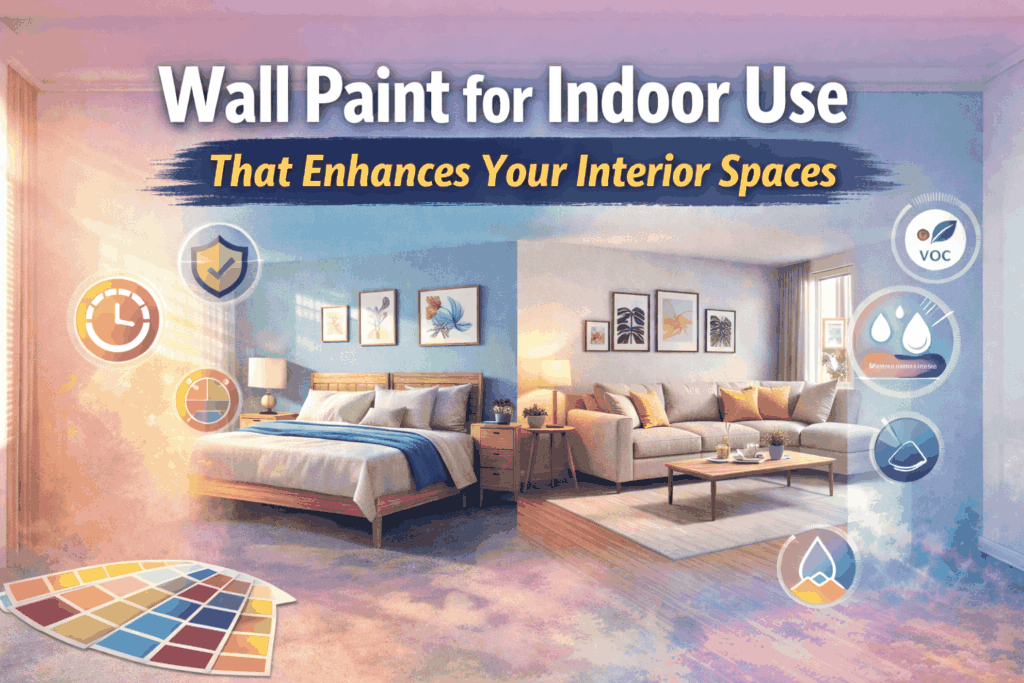
Walk into any beautifully designed home and one thing instantly stands out before furniture, décor, or lighting: the walls. Interior wall paint is not just a background element. It shapes mood, defines space, and directly affects how comfortable and premium a room feels.
According to interior design studies, people form a first impression of an indoor space within the first 7 seconds, and wall color plays a major role in that perception. This makes choosing the right indoor wall paint one of the smartest investments for any home or commercial space.
Let’s explore how the right interior paint enhances spaces, backed by data, practical insights, and smart comparisons.
Why Indoor Wall Paint Matters More Than You Think
Many homeowners underestimate paint and focus heavily on furniture. However, recent design research shows otherwise.
Interesting Interior Design Stats
| Factor | Impact on Interior Experience |
|---|---|
| Wall color & finish | 60 percent of visual perception |
| Lighting | 25 percent |
| Furniture & décor | 15 percent |
This means more than half of how a room feels depends on wall paint alone.
Additionally:
- Homes with well-maintained interior paint sell up to 5 percent faster
- Neutral and well-chosen wall colors can increase perceived room size by up to 20 percent
- Washable interior paints reduce repainting frequency by 30 to 40 percent
What Makes a High-Quality Indoor Wall Paint Different
Not all interior paints perform the same. High-quality indoor paint is designed for real-life usage, not just visual appeal.
Key Performance Features That Matter
- Smooth and uniform coverage
- Minimal brush and roller marks
- Resistance to stains, dust, and fingerprints
- Low odor during and after application
- Long-term color stability
- Safer indoor air quality
Cheap paints may look fine initially but usually start fading, cracking, or staining within 1 to 2 years.
Indoor Wall Paint vs Low-Quality Paint (Quick Comparison)
| Feature | High-Quality Indoor Paint | Low-Quality Paint |
|---|---|---|
| Coverage | Excellent (fewer coats) | Poor (more coats needed) |
| Finish | Smooth and elegant | Patchy and uneven |
| Washability | Easy to clean | Color fades on cleaning |
| Odor | Low odor | Strong chemical smell |
| Durability | 5 to 8 years | 1 to 3 years |
| Overall cost | Cost-effective long term | Expensive over time |
This table alone explains why premium interior paint is a smarter long-term choice.
Choosing the Right Paint for Each Interior Space
Every room has a different function, so one paint type does not fit all.
Living Rooms
Living rooms benefit from:
- Matt or soft satin finishes
- Light neutrals or warm tones
These finishes hide minor wall imperfections and create an inviting environment.
Bedrooms
Bedrooms should promote relaxation.
- Calm shades like soft blues, greys, or warm off-whites
- Low-odor matt paints
Studies show cool and soft colors can improve sleep quality by up to 15 percent.
Kitchens
Kitchens demand performance.
- Washable and moisture-resistant paint
- Semi-gloss finish
These paints handle grease, humidity, and frequent cleaning without losing shine.
Bathrooms
Bathrooms face high humidity.
- Mold-resistant interior paint
- Satin or semi-gloss finish
Proper paint choice can reduce mold issues by up to 70 percent.
Kids’ Rooms
Kids’ rooms need durability.
- Highly washable paint
- Bright but balanced colors
Washable interior paints reduce repainting needs even with daily wear and marks.
How Wall Paint Colors Change Human Behavior
Color psychology is not a theory; it is backed by research.
| Color Type | Psychological Effect |
|---|---|
| Light neutrals | Makes rooms feel larger |
| Warm tones | Creates comfort and energy |
| Cool tones | Promotes calm and focus |
| Dark shades | Adds luxury when used correctly |
Offices using calm color palettes have shown up to 12 percent improvement in focus and productivity.
Pro Tips for Getting the Best Interior Paint Results
To truly enhance interiors, application matters as much as paint quality.
- Always clean walls before painting
- Use primer for better adhesion and finish
- Avoid painting in high humidity
- Allow proper drying time between coats
- Invest in good rollers and brushes
Professionally applied high-quality paint can last twice as long as poorly applied paint.
Why Investing in Premium Indoor Wall Paint Is Worth It
Interior paint is not an expense. It is an investment.
- Better aesthetics
- Lower maintenance
- Improved comfort
- Higher property value
- Healthier indoor environment
Over a 5-year period, premium interior paint often costs less overall than repeatedly repainting with cheaper alternatives.
Final Thoughts
Wall paint for indoor use has the power to completely transform interior spaces. With the right combination of quality, color, and finish, walls can make rooms feel larger, brighter, calmer, and more luxurious.
If you want interiors that impress visitors, feel comfortable every day, and stay fresh for years, investing in high-quality indoor wall paint is the smartest decision you can make.